Engineering the Modern Perimeter: Technical Insights from the SIA Perimeter Security Subcommittee Session
For professional security designers and B2B procurement specialists, a perimeter is often viewed as a singular physical line—a fence, a wall, or a gate. However, the technical deliberations at the SIA Standards and Technology Open House (May 14, 2026)—specifically within the Perimeter Security Subcommittee—revealed a shift toward a more sophisticated “spatial logic.”
Athenalarm participated in this session to help bridge the gap between advanced hardware and the evolving standards for critical infrastructure. The consensus is clear: an effective perimeter is a calculated system of setbacks, clear zones, and legal intent buffers.
1. The TVRA Framework: A Scalable Necessity
The foundation of any high-security site is the Threat, Vulnerability, and Risk Assessment (TVRA). James, the chair of the TVRA working group, highlighted that the industry is moving toward a standardized framework that scales from commercial warehouses to nuclear facilities.
James emphasized the necessity of a structured approach, noting that the group’s goal is to provide “guidelines for general practitioners to use to help shape how they view the threat and risk assessment… for any type of site.” When designing for verticals like Power and Energy, the assessment must incorporate NERC compliance and specific power production requirements.
2. The “Clear Zone” Formula: Distance = Time
The “Clear Zone”—the unobstructed area on both sides of a barrier—is a critical tactical space. While military standards (UFC) often demand massive 50-foot zones, these are frequently impractical in commercial settings.
The technical consensus moved toward a functional approach. Nicholas, an SIA coordinator, argued that “The standoff or clear zone for the sake of a standoff or clear zone is… functionally inefficient and a waste of land.” Instead, the width must be purpose-driven:
- The Logic: If you need surveillance, the clear zone must facilitate it.
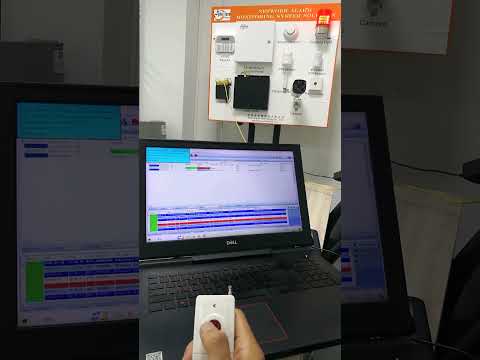
- The Metric: Distance must buy enough Response Time. If an Athenalarm network alarm monitoring system triggers at the fence, the clear zone must be wide enough for responders to intercept the intruder before they reach the high-value asset.
3. The 5-Meter Setback: Avoiding the Property Line Trap
A recurring warning in the session was the danger of placing fences directly on the property boundary. Nicholas pointed out a strategic flaw: “Putting your perimeter fence exactly on the edge of your property is a mistake, because then you… eliminate your ability to control what gets stacked up against your fence on the other side.”
The Technical Best Practice:
- 5-Meter (16.4 ft) Setback: This is the recommended “gold standard.”
- Why? It ensures the fence is clear of underground utilities, avoids privacy liabilities (cameras recording neighboring land), and creates a “Yellow Zone” that proves an intruder’s intent once crossed.
- Expert Opinion: Mark, an industry veteran, noted: “I’ve never once recommended in my career… closer than ten feet to your actual property line, because you have to show intent.”

4. Quantifying Legal Enforceability via Signage
To prosecute an intruder, the perimeter must establish “malice of intent.” This is achieved through specific signage density.
- The 30-Yard Baseline: Nicholas suggested looking to Department of Natural Resources standards: “Signs or indicators must be within thirty yards (approx. 90 feet), clear line of sight, unobstructed.” He called this the “least acceptable standard.”
- The 10-Yard High-Security Standard: For critical sites, doubling this density—one sign every 10 yards (30 feet)—virtually eliminates any legal defense of “accidental wandering.”
- Data Center Norms: According to ANSI/BICSI 002, intervals of 100 feet are standard for exterior plant signage.
5. Specialized Standards: Data Centers and TEMPEST
For digital infrastructure, the perimeter also acts as an electronic shield. Experts discussed TEMPEST (Signal and Information Control), where clear zones are calculated to prevent “electronic sniffing” devices from amplifying internal server signals.
| Standard | Key Takeaway |
|---|---|
| ANSI/BICSI 002 | Dictates specific setback and signage intervals for external data center plant infrastructure. |
| NIST 800-53 | Focuses on physical security perimeters with mandatory access control logs and standoff. |
| TEMPEST Logic | Wide clear zones prevent adversaries from getting high-gain sensors close to hardware. |
6. Hostile Vegetation: The Green Barrier
An innovative highlight was the integration of CPTED (Crime Prevention Through Environmental Design) via Hostile Vegetation. Nicholas is currently developing a database of plants that are physically punishing (thorny/dense) yet ecologically sound.
The goal is to move toward a landscape architecture that serves security: “No, we’ve got drought-resistant, soil-conserving… hostile vegetation.” This adds a zero-foot deterrent layer that doesn’t block camera sightlines but significantly slows down an intruder.
Summary: Engineering a Defensible Perimeter
The SIA Perimeter Security Subcommittee session proved that a modern perimeter is an exercise in engineering and legal strategy. By participating in these high-level discussions, Athenalarm ensures our Perimeter Alarm Monitoring Solutions are designed for the real-world complexities of 2026 and beyond.
Technical Checklist for Designers:
- Setback: 5 meters from the property line to maintain control.
- Clear Zone: 5 meters interior/exterior (Distance = Time).
- Signage: 10 to 30-meter intervals to establish legal intent.
- Hardware: Use high-density panels like the AS-9000 alarm control panel to manage the increased sensor load of these expanded zones.