Engineering Specification Guide: Evaluating Commercial Alarm Panel Manufacturers on Bus Line Topology, Multi-Path IP Protocols, and CMS Receiver Interoperability
Selecting a commercial alarm panel manufacturer is not primarily a hardware-price decision. It is an architecture, interoperability, and lifecycle decision.
A panel with more zones, a lower unit price, or a larger enclosure can still become the more expensive choice after deployment if its RS-485 bus is difficult to engineer, its communication path fails unpredictably, its reporting protocol is only partially implemented, or the CMS receiver interprets events differently from the panel.
Security Alarm Manufacturers vs. Security System Manufacturers: A Central-Station Interoperability Guide to Commercial Intrusion Panels and Distributor-Ready Deployment
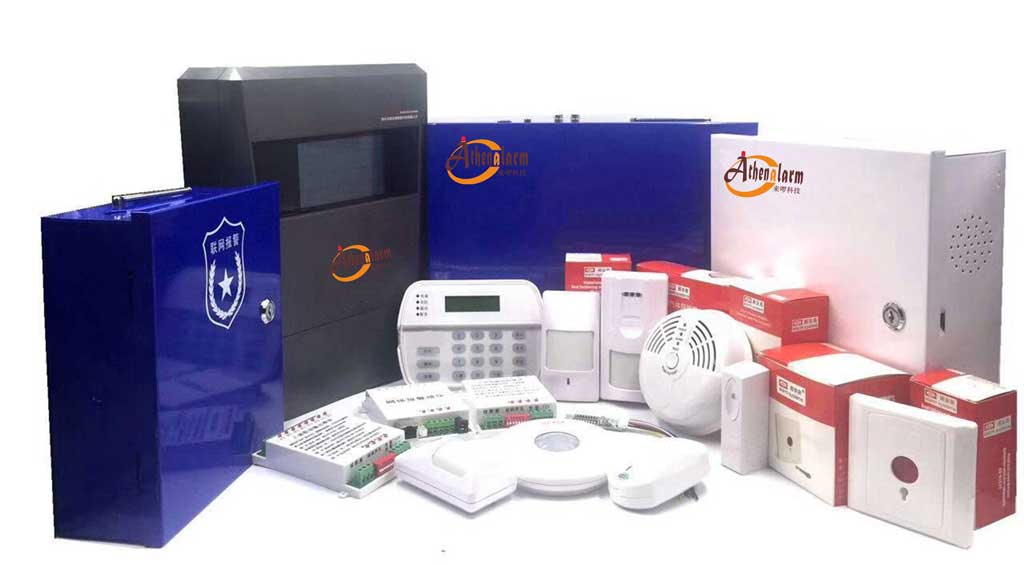
A commercial intrusion panel rarely fails because the enclosure is cheap or the zone count is low. It fails at the seams — between the communicator and the receiver, between the event code and the operator’s screen, between the failover claim on the datasheet and what actually happens when the primary path drops. For a distributor, importer, or systems integrator, the manufacturer that matters is the one that has engineered those seams, not just the panel.
Unified Telemetry Resilience Architecture (UTRA): A B2B Engineering Framework for Commercial Intrusion Panels, Multi-Path Signaling, and CMS Interoperability
In modern commercial security engineering, system reliability is no longer defined by whether an intrusion panel can “function under normal conditions.” The real question is far more uncomfortable: what happens when everything starts failing at once—silently, partially, and unpredictably?
Across large-scale deployments such as logistics hubs, financial institutions, and distributed retail infrastructure, alarm systems rarely fail in obvious ways. Instead, they degrade gradually. A panel may still appear online. Heartbeats may still be transmitted. IP sessions may still be established. Yet somewhere between the edge device and the Central Monitoring Station (CMS / ARC), the integrity of the telemetry chain quietly collapses.
Beyond the Burglar Alarm Factory: How Intrusion Alarm System Manufacturers Shape Central Station Monitoring Architecture for Multi-Site Commercial Security Deployments
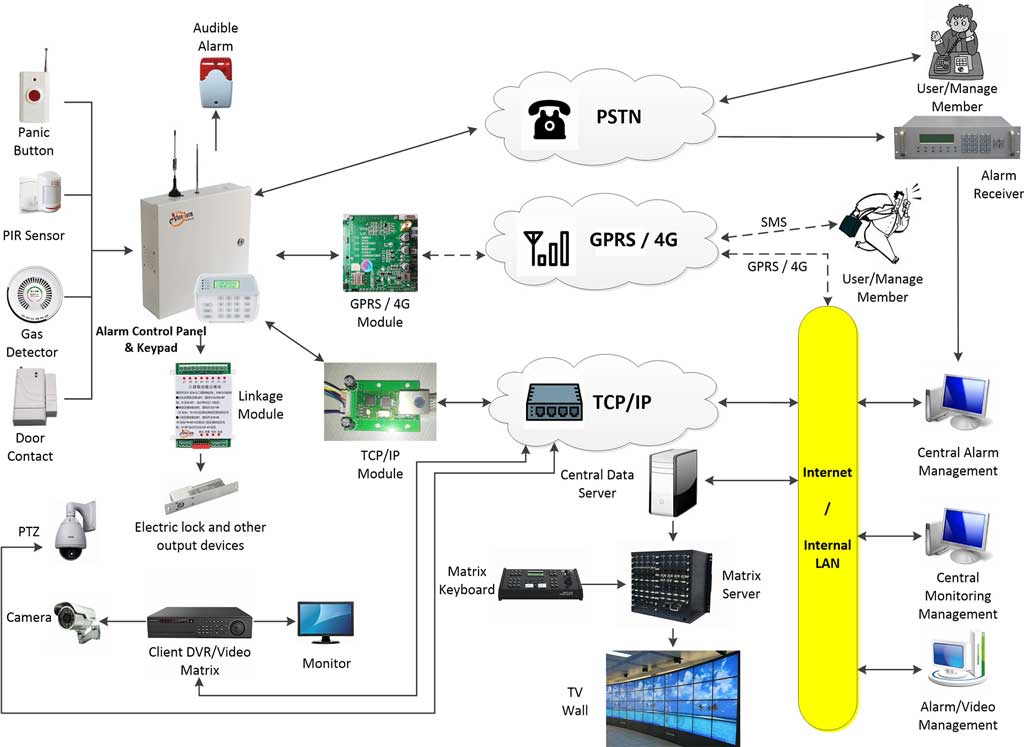
Executive Summary: Why Alarm System Architecture Matters More Than Alarm Hardware
In commercial electronic security, a common error made by distributors, system integrators, and procurement officers is treating the intrusion alarm panel as an isolated commodity. Evaluating a manufacturer solely on per-unit hardware costs ignores the operational reality of enterprise security. The true cost of an intrusion alarm system is realized at the integration layer between the remote multi-site facility and the Central Monitoring Station (CMS).
Evaluating Bus-Topology and IP-Multiplexing Architecture in Factory Security Systems: A Technical Guide for Commercial Alarm Distributors and System Integrators
The panel you choose for a 40,000 m² manufacturing complex is not the same decision as choosing one for a chain of retail stores. Factory environments impose electrical, topological, and operational constraints that expose every weakness in an alarm system’s underlying architecture — and those weaknesses become your warranty liability, your unbillable truck rolls, and your lost renewal contracts.
This guide is written for commercial alarm distributors, security integrators, and procurement managers who are responsible for designing or sourcing intrusion alarm infrastructure for large-scale industrial and manufacturing facilities. It covers the real engineering tradeoffs involved in selecting between traditional analogue wiring, addressable RS-485 bus topology, and modern IP-multiplexed architectures — and explains how that hardware decision directly impacts your total cost of deployment, monitoring center compatibility, and long-term service margin.
Engineering the Modern Perimeter: Technical Insights from the SIA Perimeter Security Subcommittee Session
For professional security designers and B2B procurement specialists, a perimeter is often viewed as a singular physical line—a fence, a wall, or a gate. However, the technical deliberations at the SIA Standards and Technology Open House (May 14, 2026)—specifically within the Perimeter Security Subcommittee—revealed a shift toward a more sophisticated “spatial logic.”
Athenalarm participated in this session to help bridge the gap between advanced hardware and the evolving standards for critical infrastructure. The consensus is clear: an effective perimeter is a calculated system of setbacks, clear zones, and legal intent buffers.
The 'Missing Link' in Security Startups: Insights from the 2026 SIA Open House
On May 7, 2026, Athenalarm had the privilege of joining the SIA Open House Series, a virtual gathering hosted by the Security Industry Association (SIA). While there were many sessions to choose from—including groups for young professionals and veterans—we spent our time in the “StartUps in Security” community.
The discussion was a powerful reminder that in the physical security world, innovation is only 20% of the battle; understanding the ecosystem is the other 80%.
From Distributor to Market Leader: How Choosing the Right Burglar Alarm Manufacturer Determines Your Global Expansion Success
Why Growth Stalls for So Many Security Alarm Distributors
A distributor can have solid local sales, a reliable customer base, and years of market experience — and still hit a wall when attempting to scale. The product line is thin. Margins are squeezed by competition. Entering a new country means starting from scratch on certifications and pricing. And the supplier that worked fine at low volumes becomes a bottleneck the moment orders double.
From Parts Supplier to Security Solution Partner: How Alarm Parts Distributors Can Scale Faster with Manufacturer-Integrated Burglar Alarm Ecosystems
Introduction: The Crossroads Every Alarm Parts Distributor Faces in 2026
Walk into any honest conversation with alarm parts distributors today, and the same pressure points surface within minutes: tightening margins on standard components, customers demanding pre-configured systems instead of individual parts, and a sourcing landscape so fragmented that managing six or eight separate suppliers for a single project is just Tuesday.

The business model that worked for the past two decades — buy sensors from one factory, panels from another, sirens from a third, and piece them together for wholesale buyers — is showing serious structural cracks. Individual components like door contacts, PIR sensors, and basic control panels have become deeply commoditized. When every supplier on Alibaba is pitching the same product spec, your only competitive lever is price, and that is a lever nobody wins by pulling indefinitely.
Why Alarm Equipment Distributors Need to Partner with Next-Gen Burglar Alarm Manufacturers Like Athenalarm
The security landscape of 2026 is unrecognizable compared to a decade ago. For alarm equipment distributors, the “good old days” of simply moving boxes and collecting a healthy margin on hardware are effectively over. We are currently navigating an era of hyper-commoditization, where generic products are a click away for end-users and price wars have turned the distribution of traditional security hardware into a race to the bottom.