From Distributor to Market Leader: How Choosing the Right Burglar Alarm Manufacturer Determines Your Global Expansion Success
Why Growth Stalls for So Many Security Alarm Distributors
A distributor can have solid local sales, a reliable customer base, and years of market experience — and still hit a wall when attempting to scale. The product line is thin. Margins are squeezed by competition. Entering a new country means starting from scratch on certifications and pricing. And the supplier that worked fine at low volumes becomes a bottleneck the moment orders double.
These are not unique problems. They reflect a structural issue that affects a significant portion of security alarm distributors operating in competitive markets: the manufacturer they source from was never designed to support their growth.
This article is written for distributors — importers, regional wholesalers, and bulk buyers — who are evaluating whether their current alarm system supplier can actually take them further, or whether it is time to restructure the sourcing side of their business around a manufacturer capable of supporting real expansion.
The Shift Happening in Security Distribution
The distribution model in the burglar alarm industry has changed substantially over the past decade. Buying product and reselling it is no longer a viable standalone strategy in most markets. The distributor who wins market share today is doing something closer to building a product ecosystem: curating a range, managing brand positioning, supporting downstream installers and integrators with technical documentation, and offering after-sales services that create stickiness with end customers.
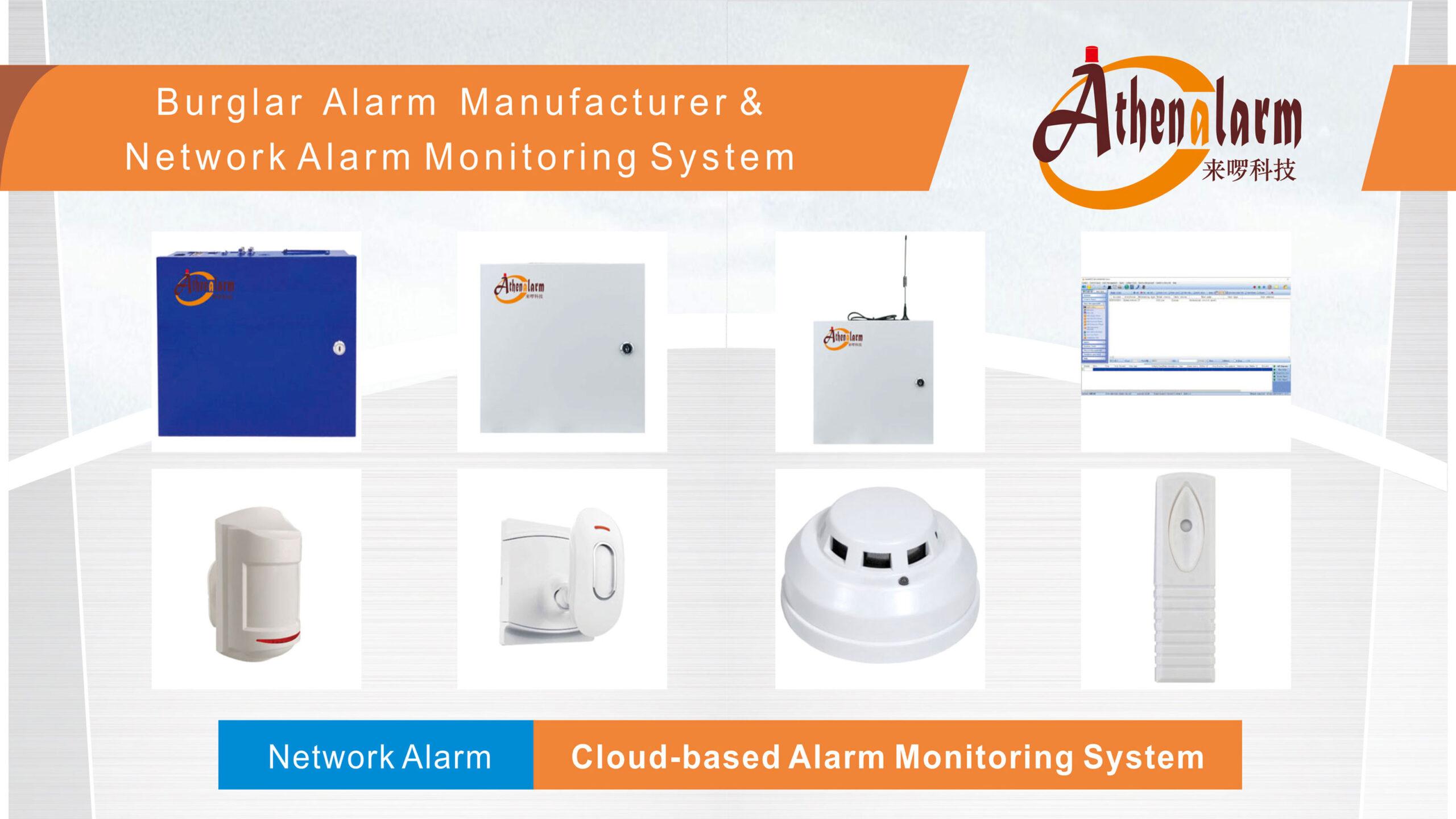
This shift matters because it changes what you need from a burglar alarm manufacturer. A supplier that simply ships boxes on time is not enough. The manufacturer must be capable of supporting OEM and private label programs, providing product customization, maintaining consistent quality across high-volume orders, and offering a product range broad enough to cover the full scope of your customers’ needs.
Security alarm distributors who have made this transition — from transactional buyers to strategic partners of their manufacturers — consistently outperform those who have not. The reason is straightforward: your product offering, your margins, and your ability to enter new markets are all functions of your supplier’s capability.
What Today’s Distributors Actually Need from a Manufacturer
Before evaluating any specific burglar alarm manufacturer, it is useful to map out what a distributor operating at scale genuinely requires. Not what sounds good in a product brochure, but what actually determines whether a partnership works in practice.
A complete product portfolio
Security alarm distributors serving mixed customer bases — residential installers, commercial integrators, property developers — cannot be competitive with three or four SKUs. You need control panels, wired and wireless sensors, PIR motion detectors, door and window contacts, smoke and gas detectors, panic buttons, sirens, and alarm accessories. The ability to fulfill an entire project from one supplier eliminates logistical complexity, simplifies QC, and increases average order value per customer.
Wireless and smart system capability
GSM, 4G, and WiFi alarm systems have become the dominant product category in most emerging markets — and are growing rapidly in established ones. Customers in Southeast Asia, the Middle East, Latin America, and Eastern Europe often lack the infrastructure or the budget for complex wired installations. They want systems that are quick to install, app-controllable via smartphone, and operable without a professional monitoring subscription. Any alarm system supplier that cannot offer credible wireless intrusion alarm solutions is leaving a significant part of the market unserved.

OEM and private label support
This is the single most important factor for distributors who intend to compete on brand rather than price. When your products carry your own label — your own name, packaging, documentation — you are building an asset. You are creating customer loyalty that does not evaporate the moment a competitor offers the same unbranded product at a lower price. OEM burglar alarm systems give distributors leverage that catalog reselling never does.
Certification for your target markets
CE marking for Europe, FCC for North America, RoHS compliance for markets with environmental regulations — these are non-negotiable entry points for legal importation and sale. A manufacturer without the relevant certifications forces you into regulatory problems, customs delays, or outright market exclusion. Before signing any supply agreement, verify which certifications are actually in place, not which ones the manufacturer claims to be pursuing.
Production capacity that matches your growth trajectory
A manufacturer that can handle your current order volume is useful. A manufacturer that can scale with you as you expand into new countries or add product lines is valuable. These are not the same thing. Factory direct supply eliminates intermediate markups, but more importantly, a direct relationship with the production source gives you visibility into lead times, quality control processes, and capacity planning.

How to Evaluate a Burglar Alarm Manufacturer for Distribution Partnerships
The process of selecting the right manufacturer is less about finding the cheapest source and more about identifying the supplier whose capabilities match the direction your business is heading. Here is a practical framework:
Product Breadth and Depth
Map your current product catalog against your customers’ actual purchasing patterns. If you are repeatedly referring customers to a second supplier for sensors or accessories that your primary manufacturer does not carry, that gap is costing you margin and creating complexity. A full-line burglar alarm manufacturer — one that covers panels, detectors, wireless systems, and accessories under a single roof — allows you to consolidate procurement and present a coherent offering to downstream buyers.
Alarm kits for resellers and wholesalers are a particularly useful evaluation point. Pre-configured kits (a panel plus a defined set of sensors and accessories) simplify purchasing for your customers and reduce your own order management overhead. Not every manufacturer has the product depth to assemble these effectively.

Wireless Technology Maturity
GSM/WiFi alarm system distributor solutions are not all created equal. Evaluate the actual communication architecture: Does the system support dual-path communication (both GSM/4G and WiFi) for redundancy? What happens when the primary network fails? Is the app stable and consistently updated? What is the false alarm rate under field conditions?
These details matter when your customers — installers and integrators — are deploying systems in real environments and calling you for support when something goes wrong. A smart intrusion alarm system that looks impressive in a product video but generates field problems will damage your reputation, not your supplier’s.
OEM and Customization Process
Ask specifically about the OEM process, not just whether it is theoretically available. What is the minimum order quantity for branded products? Can packaging, user manuals, and firmware be customized? What is the lead time for a first run of private label products? Are there existing distribution partners in your region that would create a conflict?
Private label burglar alarm systems are a long-term investment. The upfront cost and longer lead times for OEM production are paid back through stronger brand recognition, reduced price pressure, and the ability to establish a product line that your customers associate directly with your company rather than with a commodity category.
Certifications — Verified, Not Claimed
Request documentation. CE declarations of conformity, FCC grant codes, and RoHS compliance certificates are all verifiable through official databases or third-party testing reports. A manufacturer that provides actual documentation rather than general assurances is demonstrating the operational discipline that translates into consistent product quality.
For distributors targeting Europe, CE certification is a legal requirement. For security alarm wholesale operations serving multiple regions simultaneously, CE plus RoHS covers a wide base. FCC matters specifically for North American market entry.
Support Structure for International Distributors
A manufacturer oriented toward global security alarm distribution opportunities — rather than simply filling domestic orders — will have clear answers to questions about international logistics, documentation for import, technical support response times, and whether they have experience working with distributors in your specific target markets.
Athenalarm: A Factory-Based Burglar Alarm Manufacturer Built for Distributors
🔗 Official website:
https://athenalarm.com/
Athenalarm is a China-based burglar alarm manufacturer with a product range spanning intrusion alarm panels, PIR motion sensors, alarm detectors, wireless alarm systems, alarm components, and smart home security solutions. The company operates as a factory-direct supplier and serves international security alarm distributors, importers, and bulk buyers.
What follows is an honest assessment of what Athenalarm offers distributors — based on their published product range and documented services — without embellishment.
Complete Alarm System Product Line
Athenalarm’s catalog covers the core product categories that a distributor serving mixed markets needs. On the detection side, the lineup includes PIR motion sensors (standard, curtain, and wide-angle variants), photoelectric smoke detectors, gas detectors, digital vibration detectors, door contacts, and both wired and wireless panic buttons, etc. On the panel side, they manufacture intrusion alarm control panels with associated address modules and linkage modules that support scalable zone configurations. Audible alarm components, warning lights, and voice reminder units round out the peripheral product range.
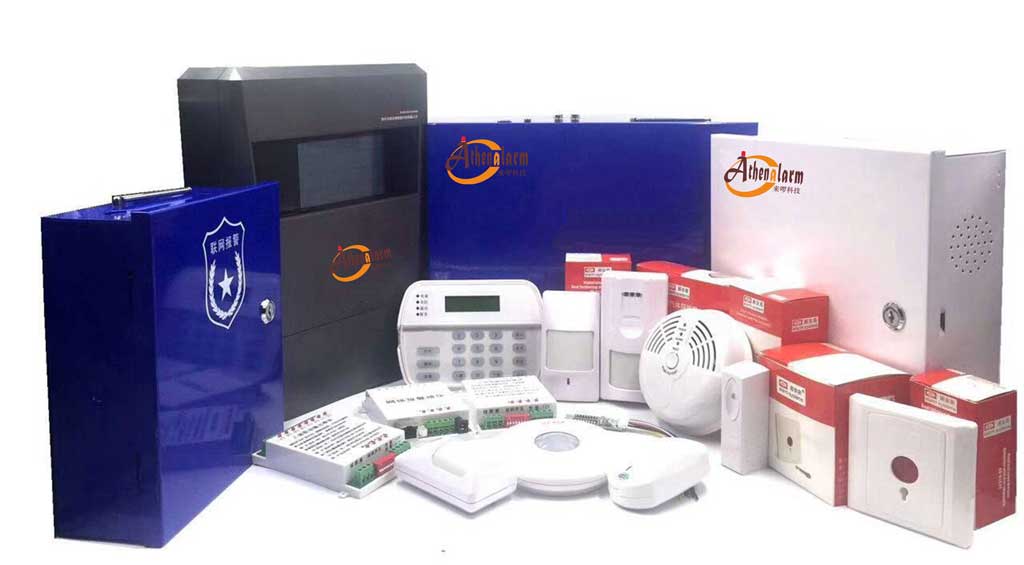
This level of breadth matters for distributors because it means you can address residential single-zone installations, small commercial multi-zone setups, and larger networked alarm systems from a single supplier — without stitching together products from multiple manufacturers.
GSM/4G and WiFi Alarm Systems
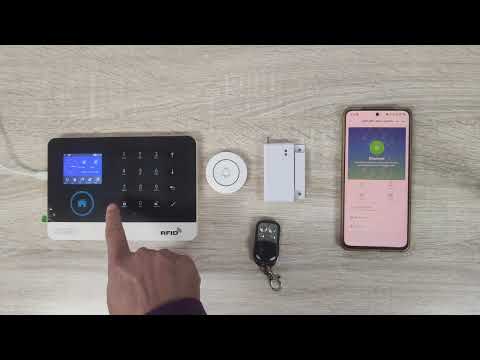
Athenalarm’s smart home category includes GSM/4G WiFi alarm systems designed for wireless deployment. These systems are positioned for markets where ease of installation and remote management via mobile app are priorities — exactly the conditions that characterize high-growth segments in emerging markets. For security alarm distributors targeting customers who need DIY-friendly or installer-quick-deploy solutions, this product category addresses a clear and growing demand.
The dual-network approach (GSM/4G plus WiFi) provides communication redundancy, which is a meaningful technical differentiator in markets where network reliability is variable.
OEM Services
Athenalarm explicitly offers OEM services for security alarm systems. This means distributors can source products under their own brand name, with custom packaging and labeling. For distributors building private label burglar alarm product lines, this capability is foundational.
The OEM path is particularly valuable in markets where customers associate product quality with the distributor’s own brand — common in many Southeast Asian, Middle Eastern, and Latin American markets where established local brands carry significant credibility. Rather than selling commodity product that any competitor can replicate, OEM sourcing from Athenalarm allows distributors to develop proprietary product lines that are difficult to undercut on price alone.

Network Alarm Monitoring System Solutions
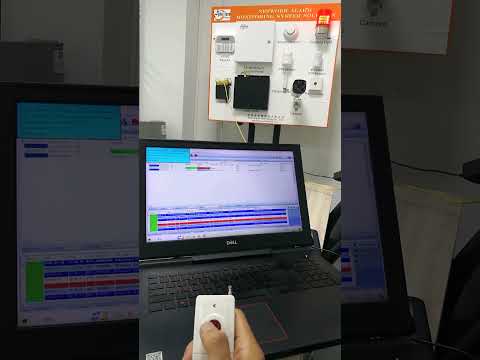
Beyond standalone product supply, Athenalarm has developed network alarm monitoring system solutions covering applications from residential house alarms to commercial deployments in banks (including ATM and vault monitoring), hotels, stores, enterprises, and community perimeter security. This solution architecture is relevant for distributors whose customers include professional monitoring centers or system integrators who need platform-level integration rather than just hardware.
The availability of alarm center management software — paired with the hardware range — means distributors can position themselves as full solution providers rather than just component suppliers. This is a meaningful commercial differentiator in markets where security alarm wholesale buyers are looking for turnkey-capable partners.
International Market Orientation
Athenalarm maintains multilingual website content in English, Spanish, French, Arabic, and Russian — which signals genuine engagement with international markets rather than nominal export activity. The company has participated in CPSE (China Public Security Expo), one of the industry’s major trade events, in both 2019 and 2023, indicating consistent presence in the professional security sector.
For distributors evaluating whether a manufacturer is genuinely oriented toward supporting international partners — or simply willing to take an order — these are relevant indicators of operational seriousness.
Building Market Leadership Through Supplier Strategy
Differentiation Starts at the Source
Distributors who build competitive advantage do so by offering products that are harder to replicate than generic alarm hardware. This means two things in practice: better product selection and brand ownership. The product selection question is answered by your manufacturer’s range and quality consistency. The brand ownership question is answered by whether you have OEM access.
When you sell unbranded commodity alarm panels, your customers can — and will — find the same product elsewhere for less. When you sell product under your own label, backed by your own technical support documentation and service commitment, you have built something that has genuine retention value.
Entering New Markets with the Right Foundation
Global security alarm distribution opportunities are most accessible to distributors who can demonstrate product compliance, supply reliability, and technical support capability. A manufacturer like Athenalarm that produces CE-compliant products and can handle high-volume orders consistently gives distributors the foundation to approach new markets with confidence rather than improvisation.
Emerging markets — particularly across Southeast Asia, Africa, and Latin America — present genuine demand for cost-effective wireless alarm systems. The combination of GSM/WiFi alarm system solutions and OEM capability is particularly suited to these markets, where distributors often need to establish brand presence rapidly and at competitive price points.
Margins Are a Function of Your Supply Chain
Factory direct pricing from a manufacturer like Athenalarm removes intermediate distributor layers that compress margins. High-margin alarm products for distributors are not about finding cheap product — they are about controlling the supply chain structure. When you are purchasing directly from the manufacturer, you have pricing visibility, negotiating leverage, and the ability to offer competitive pricing downstream without destroying your own margins.
The private label strategy amplifies this further. Branded product commands higher perceived value. When your customer associates quality with your brand name, price comparisons against unbranded competitors become less direct — and your margin protection improves accordingly.
Scaling the Distribution Model
Distributors who have moved beyond simple reselling typically operate across multiple channels simultaneously: direct wholesale to installers, supply to system integrators, and increasingly, structured e-commerce for alarm kits and accessories targeting smaller installers and DIY-capable end users. Serving all of these channels effectively requires a manufacturer with enough product depth and production capacity to support variable order patterns.
Alarm kits for resellers and wholesalers — pre-configured packages that lower the purchasing barrier for smaller buyers — are a practical example of how a strong manufacturer relationship translates into flexible commercial strategy. A distributor who can offer configured kits has a product for every buyer segment, from the small electrical contractor to the large systems integrator.

A Practical Scenario: From Regional Distributor to Multi-Country Operator
Consider a distributor operating in a single country with a modest product line — a handful of alarm panels, a limited sensor range, and no branded presence. The business is stable but capped. Entering neighboring markets requires product compliance that the current supplier cannot provide. The lack of OEM options means any expansion simply replicates the same unbranded commodity model.
The decision to restructure around a full-line manufacturer with OEM support changes the trajectory. With a broader product portfolio, the distributor can serve installation contractors who previously had to go elsewhere for detectors and accessories. With CE compliance from the manufacturer, market entry into regulated territories becomes procedurally straightforward. With private label products, the distributor builds brand recognition in new markets rather than starting each country as an anonymous reseller.
This is not a hypothetical. It is the operational logic that separates security alarm distributors who stay regional from those who build multi-country distribution networks over five to seven years. The manufacturer is the enabling factor.
Conclusion: The Manufacturer Decision Is the Growth Decision
The ceiling on a distributor’s growth is largely set by the capabilities of their alarm system supplier. A manufacturer that cannot support OEM, does not carry a complete product range, lacks relevant certifications, or cannot scale production will constrain your expansion regardless of how well you execute on the commercial side.
Choosing a capable, factory-based burglar alarm manufacturer is not a peripheral decision — it is the core strategic variable in your growth plan. The right manufacturer gives you the product depth to serve diverse customers, the OEM capability to build a defensible brand, the certification infrastructure to enter regulated markets, and the production scale to handle growth without supply disruptions.
Athenalarm offers security alarm distributors a factory-direct relationship with a product range that covers the full intrusion alarm spectrum — from standalone wireless systems to networked monitoring solutions — with explicit OEM support and international market orientation. For distributors evaluating their current supply chain or planning expansion into new territories, it is a manufacturer worth examining closely.
Next Steps
If you are a security alarm wholesale buyer, importer, or regional distributor looking to expand your product range or develop a private label alarm line:
- Explore Athenalarm’s full product range at https://athenalarm.com — covering alarm panels, motion sensors, detectors, wireless systems, and accessories.
- Review the OEM services available for distributors at https://athenalarm.com/burglar-alarm-manufacturer/our-services/oem-security-alarm-systems/.
- Contact the team directly to discuss distributor partnership terms, minimum order quantities, and OEM program details at https://athenalarm.com/contact/.
The right burglar alarm manufacturer is not a vendor you manage — it is a partner that determines how far you can go.