Beyond the Burglar Alarm Factory: How Intrusion Alarm System Manufacturers Shape Central Station Monitoring Architecture for Multi-Site Commercial Security Deployments
Executive Summary: Why Alarm System Architecture Matters More Than Alarm Hardware
In commercial electronic security, a common error made by distributors, system integrators, and procurement officers is treating the intrusion alarm panel as an isolated commodity. Evaluating a manufacturer solely on per-unit hardware costs ignores the operational reality of enterprise security. The true cost of an intrusion alarm system is realized at the integration layer between the remote multi-site facility and the Central Monitoring Station (CMS).
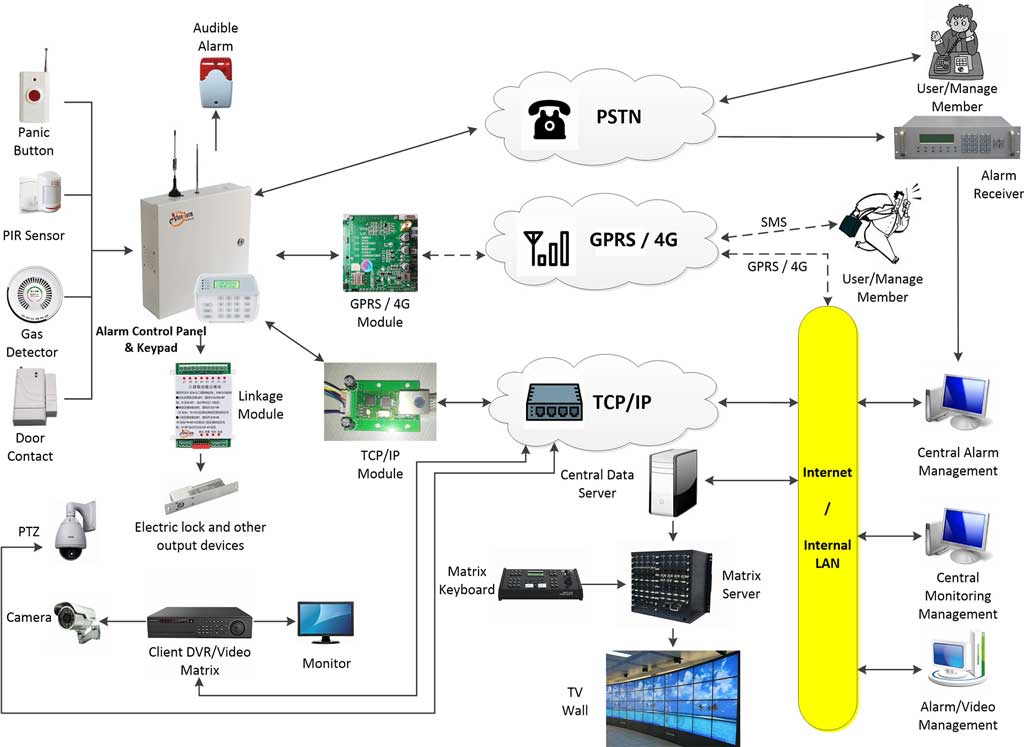
The Enterprise Transmission Chain
The transmission pipeline moves systematically across three core layers:
-
Remote Facility Endpoints: Edge sensors, detectors, and localized RS-485 bus topologies capture the initial physical intrusion event.
-
Network & Transmission Layer: Encrypted transmission paths utilize SIA DC-09 or Contact ID over multi-path WAN (LAN, 4G LTE) to securely route packets.
-
Central Station (CMS): Advanced automation software and hardware receivers handle decryption, event parsing, and automated operator workflows.
When deploying across hundreds of commercial sites—such as bank branches, retail chains, or logistics hubs—the hardware manufacturing design directly dictates system uptime, false alarm rates, and ongoing maintenance overhead. A poorly architected control panel firmware or a restrictive communication protocol creates significant problems for the CMS. This results in missing heartbeat signals, delayed alarm transmissions, and excessive manual overhead for monitoring operators.
For security distributors and OEM buyers, long-term profitability relies on selecting a manufacturer that builds holistic network-centric security infrastructure rather than just standalone hardware boxes. This technical whitepaper analyzes how the architectural choices made by an intrusion alarm system manufacturer—specifically focusing on advanced enterprise platforms like the Athenalarm AS-9000 alarm control panel ecosystem—impact signal propagation, CMS workflow optimization, and multi-site scalability.

Why Modern Commercial Security Requires More Than a Burglar Alarm Factory
From Standalone Alarm Panels to Network-Centric Security Ecosystems
Legacy intrusion alarm manufacturing focused on localized hardware logic. Panels functioned as basic physical switch-aggregators. They processed dry-contact loops from passive infrared (PIR) sensors or magnetic door contacts, tripped a local relay to activate an audible siren, and utilized public switched telephone networks (PSTN) to upload raw Dual-Tone Multi-Frequency (DTMF) tones to a receiver.
Modern commercial facilities require network-centric ecosystems. Today’s intrusion panel serves as an edge-computing gateway integrated into the wider corporate network infrastructure. It must concurrently handle encrypted IP polling, manage localized access control schedules, interact with IP video streams for real-time verification, and maintain continuous communication with secondary and tertiary backup communication paths.
Why Intrusion Alarm System Manufacturers Now Influence Security Operations
The engineering design choices made during a panel’s development phase directly impact daily monitoring operations. If a manufacturer implements a proprietary, non-standardized communication protocol instead of open industry standards like SIA DC-09, the downstream monitoring center is forced to purchase proprietary, single-purpose hardware receivers or expensive software licenses.
Furthermore, the firmware design dictates how the system handles line-supervision faults, intermittent network drops, and concurrent event storms. When a manufacturer designs robust packet-retry logic and intelligent local event buffering into their panels, the CMS experiences fewer false line-drop alerts. This directly minimizes the operational burden on operators and helps prevent unnecessary, costly guard dispatches.
The Shift from Device Manufacturing to Security Infrastructure Design
| Era | Focus | Technical Constraints & Limits | CMS Operational Impact |
|---|---|---|---|
| Traditional Alarm Era | Standalone Hardware | Legacy copper PSTN lines, unencrypted DTMF signaling, point-to-point hardwired topologies. | High latency (15–30 second transmission times), zero remote diagnostic visibility, high vulnerability to physical line cuts. |
| Network Alarm Era | IP/Cellular Monitoring | Basic TCP/IP reporting, proprietary software integration, unencrypted fallback paths. | Faster signal speeds, but prone to high false alarm rates due to erratic IP polling and lack of edge-level intelligence. |
| Integrated Security Era | Event Intelligence & Infrastructure | Edge computing, native multi-path routing, open protocol standards (SIA/Contact ID over IP), native video verification hooks. | Sub-second transmission latencies, real-time remote configuration, granular diagnostic insights, and highly optimized operator workflows. |
The Hidden Layer of Intrusion Alarm System Manufacturers: Monitoring Infrastructure Design
Ecosystem Component Hierarchy
The flow of field data within a network-centric architecture follows a definitive pathway:
-
Athenalarm AS-9000 Alarm Control Panel: Serves as the central logic unit at the facility edge.
-
RS-485 Local Bus Connection: Integrates distributed hardware expansion modules and zones (scaling up to 128+ loops).
-
SIA DC-09 / Contact ID IP Connection: Transmits serialized data packages directly to the Integrated Alarm Center Management Software.
- Upstream Automation Interface: Delivers structured, parsed events to the active CMS automation receivers.
-
Alarm Control Panel Architecture
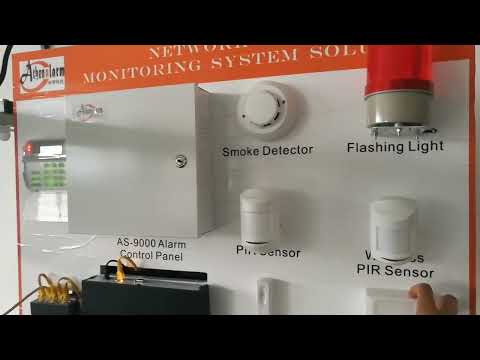
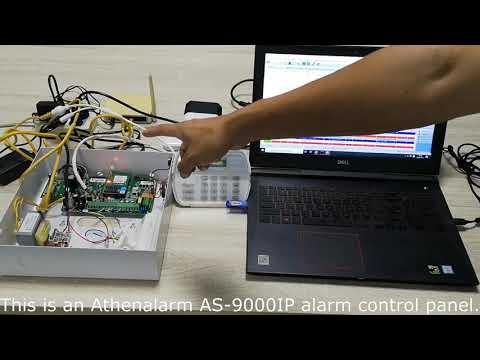
At the core of an enterprise deployment is the structural topology of the control panel itself. Advanced systems, such as the Athenalarm AS-9000 alarm control panel, utilize an expandable, modular architecture that supports large zone counts (expanding from 8 basic onboard zones up to 128 or more addressable zones).
Engineering integrity at this layer depends on bus reliability. The communication bus—typically an RS-485 configuration—must handle high data throughput across long cable runs without experiencing voltage drops or signal attenuation.
A well-designed panel architecture incorporates isolated surge protection on zone inputs, offers end-of-line (EOL) resistor customizability to match pre-existing field wiring, and provides intelligent power distribution to support external expansion modules without straining the primary backup battery systems.
Alarm Communication Architecture
The transmission of emergency data from the commercial edge to the CMS requires a highly resilient communication architecture. Modern panels incorporate a native combination of high-speed TCP/IP (LAN) and cellular communicators (GSM/4G LTE).
The underlying firmware must support simultaneous, parallel socket connections. Rather than relying on simple sequential failovers—where the cellular backup only initializes after the LAN path is entirely lost—a robust network-oriented architecture maintains active parallel connections or executes instant, sub-second failovers. This approach guarantees that critical fire, panic, or burglary signals are never dropped due to routing delays.
Alarm Monitoring Software Architecture
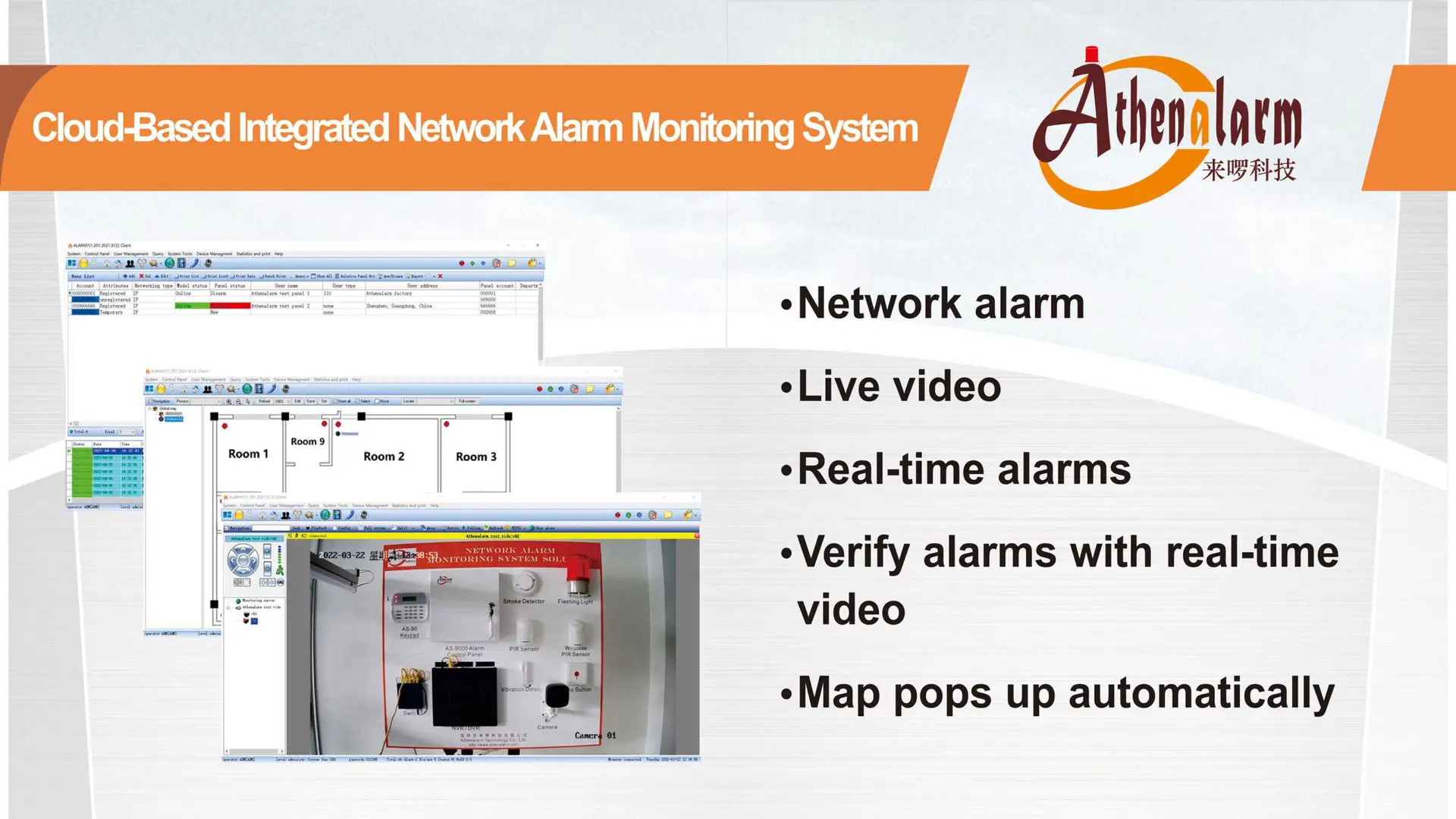
A premier intrusion alarm manufacturer does not stop at the physical hardware panel; they also engineer the corresponding upstream software suite. Software frameworks like Athenalarm’s Network Alarm Center Management Software act as an intermediary layer that aggregates incoming event data from thousands of distributed panels.
This software architecture utilizes a client-server topology with robust SQL database backends to parse incoming TCP/IP data streams, manage panel configuration profiles, and handle real-time status tracking. The software must feature built-in redundancy, allowing automatic hot-standby failovers to a secondary server if the primary monitoring host experiences a hardware or network failure.
Central Station Integration Architecture
To ensure seamless operations, the manufacturer’s ecosystem must easily interface with established industry-standard central station automation platforms (such as Manitou, IMMIX, MasterMind, or Bold Gemini).
This compatibility is achieved by implementing standard receiver protocols over IP, including Sur-Gard Fibro, Ademco 685, or standard SIA DC-09 receiver emulation. By verifying that the panel’s event codes accurately map to standard Contact ID formats or rich SIA text identifiers, the manufacturer ensures that the central station operator receives clear, actionable event data rather than ambiguous raw hex strings.
What Is a Network-Oriented Intrusion Alarm System Manufacturer? A network-oriented intrusion alarm system manufacturer is an engineering firm that designs and manufactures electronic security systems where every endpoint, control panel, and management console is engineered as a secure node within an IP-based infrastructure. Unlike traditional manufacturers that focus primarily on physical hardware enclosures and localized relay loops, a network-oriented manufacturer prioritizes software-defined communication protocols (e.g., SIA DC-09 with AES-256 encryption), native multi-path transmission paths, remote programmatic diagnostics, and seamless integration with enterprise central station monitoring systems.
How Alarm Communication Design Determines Monitoring Performance
PSTN vs GSM vs 4G vs TCP/IP
The choice of communication medium determines the latency and reliability of the signal chain. While legacy PSTN copper lines are being globally decommissioned due to high maintenance costs and slow transmission speeds, modern digital alternatives vary significantly in performance metrics:
| Technology | Latency | Reliability | Scalability | Commercial Suitability |
|---|---|---|---|---|
| PSTN | Extremely High (15–30s) | Low (Vulnerable to physical line cuts) | Very Low (1 line per panel) | Obsolete; unsuitable for modern commercial sites. |
| GSM (2G/3G) | Moderate (3–7s) | Medium-Low (Fading global carrier support) | Medium | Phased out in most territories due to spectrum sunsetting. |
| 4G LTE | Low (1–2s) | High (Excellent cellular footprint) | High (Supports dynamic IP reporting) | Critical for secondary failover or primary air-gapped locations. |
| TCP/IP (LAN) | Ultra-Low (<0.5s) | High (Dependent on local IT uptime) | Extremely High (Infinite software scaling) | Mandatory for primary real-time commercial enterprise monitoring. |
Multi-Path Communication Strategies
To achieve high levels of security certification (such as EN 50131 Grade 3 or UL 1023 Commercial Burglary standards), a multi-path communication strategy is required. The control panel must be configured to continuously evaluate the health of its primary connection path (typically TCP/IP).
If a network switch fails or an IT firewall blocks outbound traffic, the panel’s internal routing engine must dynamically re-route data through the secondary 4G LTE cellular path. This transmission path transition must occur without resetting the panel or dropping buffered alarm events, ensuring that the central station receives the emergency signal along with a supplementary network fault alert.
Multi-Path Transmission Failover Logic
| Step | Action Baseline | Evaluation Parameter | Alternative & Contingency Loop |
|---|---|---|---|
| 1 | Primary Path Test | Packet delivery confirmation within defined sub-second threshold. | If successful, maintain primary IP socket and continue routine heartbeat intervals. |
| 2 | Fault Detection | Loss of response from primary CMS receiver engine. | Route traffic instantly to the secondary firmware communication bus. |
| 3 | Cellular Engagement | Carrier registration status and signal strength valuation. | Buffer local event logs in non-volatile memory if cell connection is delayed. |
| 4 | Event Delivery | Receive cryptographic acknowledgment (ACK) packet from secondary receiver. | Maintain cellular routing until LAN connectivity proves stable for a set period. |
Signal Reliability During Network Failures
During a localized network failure, a standard consumer-grade alarm panel often fails or drops off the network entirely, leading to a missed alarm or an unmonitored facility. In contrast, an enterprise panel features an intelligent local event buffer that non-volatilely stores thousands of chronological logs.
Once network connectivity is re-established, the panel uses an auto-reconnection routine to resynchronize with the CMS server, flushing the buffered events using a first-in, first-out (FIFO) methodology. This ensures that the facility’s audit trail remains accurate and unbroken.
Alarm Event Prioritization and Routing Logic
Not all data generated by an intrusion panel carries the same operational weight. A panic button activation or a confirmed bank vault seismic sensor trip demands immediate human intervention. Conversely, a low-battery notice on a wireless keyfob or an intermittent AC power fluctuation can be handled as a lower priority.
Advanced manufacturers implement an internal Quality of Service (QoS) packet prioritization structure within their transmission firmware. Alarm events are assigned a high priority tag and sent over the fastest open socket. System maintenance, supervisory, and fault codes are batched and transmitted on a secondary cycle to prevent network congestion at the CMS receiver during large-scale weather or power emergencies.
Architecture Comparison: Traditional Intruder Alarm Manufacturers vs Network-Oriented Manufacturers
Manufacturing Capability Comparison Matrix
| Functional Capability | Traditional Hardware Manufacturer | Network-Oriented Manufacturer (e.g., Athenalarm) |
|---|---|---|
| Core Alarm Panel Design | Fixed onboard zone inputs, localized hardware design. | Modular expansion (AS-9000), support for addressable loop modules. |
| Monitoring Software Integration | Third-party software dependencies, basic terminal tools. | Fully integrated, proprietary Alarm Center Software with open SDKs. |
| Central Monitoring Integration | Limited to raw legacy analog receivers (PSTN/DTMF). | Multi-protocol native IP reporting (SIA DC-09, Contact ID). |
| Multi-Site Deployment Scaling | Independent manual configurations per physical site. | Centralized template provisioning and remote configuration profiles. |
| Remote Diagnostics & Audits | Requires manual on-site technicians with specialized cables. | Real-time remote loop resistance checking and bus diagnostic analysis. |
| Advanced Alarm Analytics | None; relies entirely on basic zone open/close triggers. | Intelligent line fault filtering and cross-zone verification logic. |
| Video Verification Hooks | None; completely independent of local CCTV networks. | Native integration with IP video streams triggered by hardware events. |
Impact on Alarm Distributors
For alarm distributors and importers, partnering with a traditional manufacturer often leads to hidden, long-term costs. When end-user integrators encounter issues with field deployments due to firmware incompatibilities, communication drops, or complex CMS handshakes, the support burden falls squarely on the distributor.
By supplying a network-oriented system, distributors can reduce their overall support overhead. These advanced systems allow integrators to diagnose wiring faults, update panel firmware versions, and verify signal paths remotely. This minimizes the need for costly field visits and repetitive product returns.
Multi-Site Commercial Deployment Challenges Faced by Alarm Distributors
Bank Branch Networks
Financial institutions present stringent deployment challenges. A single bank network can encompass hundreds of physical branches spread across multiple provinces or nations, all requiring centralized monitoring at a secure corporate security operations center (SOC).
Panels must be split into multiple distinct partitions (e.g., ATM lobby, main teller line, secure vault, employee breakroom), each operating on independent arming schedules. The manufacturing architecture must support granular user access controls, duress code tracking, and strict anti-masking sensor loops to comply with institutional insurance requirements.
Retail Chains
For multi-site retail chains, the primary operational challenges are managing high event volumes and minimizing internal inventory shrinkage. Hundreds of locations opening and closing daily create a massive stream of arming, disarming, and late-to-close events that can easily overwhelm standard monitoring centers. The manufacturer’s software platform must automate the processing of these routine scheduled events, surfacing exceptions only when a store fails to secure itself by a designated time.
Warehouses and Logistics Facilities
Logistics facilities feature vast physical footprints that test the distance limitations of standard device wiring. When long wire runs are routed alongside high-voltage industrial conduits, induced electromagnetic interference (EMI) can corrupt data on the keypad bus or trigger false alarms on zone loops. A commercial-grade panel resolves this by implementing robust shielding protocols, utilizing differential signaling over RS-485 networks, and offering loop expansion modules that can be distributed near physical perimeter zones. This approach helps maintain signal integrity across long distances.
Educational Campuses
Sprawling school and university campuses require a hybrid design that blends localized building autonomy with centralized administration. Intrusion systems must link directly with campus access control platforms, fire alarm monitors, and emergency mass notification networks. If an incident occurs in a specific building, the system must trigger localized sounders while transmitting precise geographic data (Building Name, Floor, Room Number) to campus dispatchers via high-speed network sockets.
Industrial Facilities
Industrial manufacturing environments expose security hardware to harsh physical conditions, including high chemical dust loads, moisture ingress, and significant temperature fluctuations. Security components placed in these environments require ruggedized enclosures with high IP (Ingress Protection) ratings. The electronic architecture must incorporate robust thermal management, transient voltage suppression (TVS) to handle power surges from heavy industrial machinery, and low-draw circuit designs to maximize operation during extended facility power failures.
Unified Multi-Site Infrastructure Layer Matrix
| Operational Layer | Structural Focus | Key Engineering Metrics | Downstream System Intersections |
|---|---|---|---|
| 1. Enterprise Target Layer | Client sites (Banks, Logistics Hubs, Campuses, Retail Stores). | Physical endpoint localization and area segmentation parameters. | Establishes the zone layout requirements for the facility. |
| 2. Field Hardware Core | RS-485 bus structures, end-of-line calibration, power isolation circuits. | Real-time loop resistance readings and peak current stability levels. | Connects physical inputs directly to the localized control logic. |
| 3. Network Transmission | Encrypted WAN links, SIA DC-09 parsing, active heartbeat polling schedules. | Path migration latency specs and packet delivery success metrics. | Bridges the edge installation with the primary automation receivers. |
| 4. Central Station Operations | Scalable database structures, event processing logic, video confirmation tools. | Time-to-desktop dispatch speed and false alarm mitigation rates. | Delivers actionable emergency events directly to the operator console. |
Alarm Monitoring Center Requirements That Manufacturers Often Ignore
Event Volume Management
During adverse weather events, a monitoring station can experience an unexpected surge in incoming signals, receiving thousands of AC power loss and battery restoration alerts simultaneously. If a manufacturer’s system does not support intelligent signal pooling and event-deduplication at the panel level, this influx can overwhelm the monitoring station’s automation software. This can delay critical processing of actual burglary or fire alerts.
Alarm Prioritization
Many control panels transmit events in a strict chronological sequence, regardless of severity. If a routine system test signal is initiated a fraction of a second before a physical duress button is pressed, the test packet is sent first. Enterprise-grade panels resolve this by employing an internal prioritizer. This mechanism intercepts incoming event triggers and ensures that critical safety and life-threat signals bypass standard diagnostic queues, delivering them to the transmission channel immediately.
Operator Workflow Efficiency
When an alert reaches an operator’s workstation, every second counts. If a system delivers ambiguous numeric zone codes without context, the operator is forced to manually cross-reference account files to identify the device location. Network-centric software platforms streamline this process by transmitting rich, descriptive data packages. These packages deliver account information, zone descriptions, partition statuses, and pre-configured response instructions directly to the operator’s main display window.
Remote Maintenance Capability
Sending a service vehicle and two field technicians to a remote site simply to modify an entry delay timer or review an event log significantly impacts an integrator’s profitability. Enterprise-grade architectures enable comprehensive remote diagnostic capabilities over a secure connection pipeline.
Authorized Remote Access Operational Scope
When a remote diagnostic session is initialized via a secure WAN or cloud gateway to an active Athenalarm AS-9000 control node, technicians can execute several remote workflows:
-
Zone Parameter Adjustment: Remotely recalibrate software loop thresholds and end-of-line resistor values without open-chassis field testing.
-
Firmware Lifecycle Patching: Remotely deploy secure, certified firmware upgrades across hundreds of panels simultaneously.
-
Non-Volatile Log Extraction: Retrieve deep chronological historical archives directly from the panel memory cache for auditing.
-
Bus Diagnostics: Measure voltage levels and communication packet loss on remote RS-485 expansion modules.
Long-Term Scalability
As an integrator expands their client portfolio, the underlying monitoring infrastructure must scale efficiently without requiring a complete hardware overhaul. Systems must feature modular software backends capable of managing thousands of concurrent panel connections. They must also support horizontal scaling through database clustering and handle high signal-per-second loads without experiencing system slowdowns or packet drops.
Integrating Intrusion Alarm Systems with CCTV for Alarm Verification
Why False Alarms Increase Monitoring Costs
False alarms present a significant financial and operational challenge within the commercial security landscape. Municipalities worldwide continue to implement strict false-alarm fines, and law enforcement agencies increasingly refuse to dispatch officers to unverified alarm activations. For monitoring centers, unverified alarms create high volumes of unnecessary traffic. This increases operator fatigue, impacts response performance for real emergencies, and raises overall operational liability.
Alarm-to-Video Correlation Workflows
To mitigate these challenges, modern systems use integrated video verification workflows following a systematic process:
-
Physical Trigger Event: An intrusion sensor, such as a dual-technology PIR sensor, vault seismic detector, or magnetic door loop, trips at the facility edge.
-
Edge Panel Logic Aggregation: The control panel processes the event state and automatically links it to a pre-assigned camera ID within its configuration matrix.
-
High-Speed Video Capture Workflow: The local system commands the localized NVR or IP camera to cut an isolated media clip encompassing a window from 10 seconds before to 10 seconds after the trigger event.
-
Packetized Unified Transmission: The system packages the encrypted alphanumeric SIA DC-09 data block alongside an encapsulated secure media token, sending it over high-speed IP paths.
-
Central Operator Delivery Console: The CMS workstation displays the incoming alphanumeric alert side-by-side with the matching synchronized video snippet for immediate review.
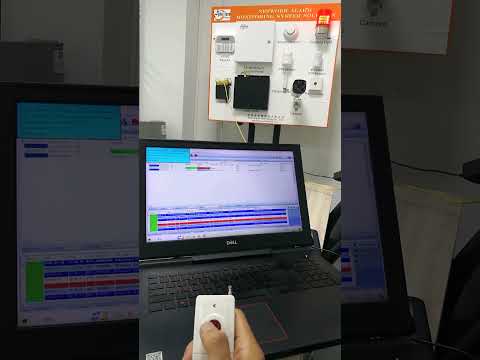
Video Verification Architecture
This integration can be deployed across three primary structural architectures:
-
Edge-to-Cloud Integration: The control panel communicates directly with cloud-managed IP cameras, generating a secure web link to the video asset that is embedded inside the standard SIA transmission block.
-
Local Video Matrix Control: The panel’s physical programmable outputs connect to the alarm input terminals of an on-site Network Video Recorder (NVR). The NVR handles the transmission of the video clip through its own network paths.
-
Unified Management Software Layer: The panel and the IP cameras report independently to a centralized platform like Athenalarm’s management software. The server handling the incoming signals handles the real-time matching and presentation of the data streams.
Operational Benefits for Monitoring Centers
By delivering unified video verification data straight to the operator’s desktop, the monitoring center can instantly visually verify whether an alarm was caused by a real security breach or an environmental false trigger (such as hanging retail promotional banners or wildlife inside a warehouse). Verified genuine alarms receive high dispatch priority from emergency services, which significantly improves apprehension rates and protects facilities from extensive property damage.
OEM and ODM Considerations for Security Alarm Distributors
Product Portfolio Scalability
For regional distributors and large-scale importers looking to build a private-label security brand, selecting the right original equipment manufacturer (OEM) or original design manufacturer (ODM) partner is a critical business decision. The manufacturing partner must offer a scalable portfolio based on an adaptable architecture. This enables distributors to market a cohesive ecosystem—ranging from cost-effective residential control kits to high-capacity commercial platforms—while utilizing a consistent programming interface and a single core software environment.
Firmware Customization
A successful private-label deployment requires deep localization capabilities. The manufacturing partner must be willing and able to customize the platform’s core firmware to support specific localized parameters. This includes translating keypad display text into specific regional languages, adjusting default wireless frequencies to meet local regulations, and modifying default SIA event tables to align with regional central station preferences.
Regional Communication Requirements
Cellular radio frequency allocations vary significantly across international borders. A cellular communicator module that works properly on European networks will fail to connect in North American or Latin American markets due to differences in carrier frequency bands.
Regional Firmware Optimization Profiles
| Engineering Parameters | European Profile Standards | North American Profile Standards |
|---|---|---|
| Regulatory Directives | CE Mark compliance, EN 50131 Grade 2/3 hardware criteria. | FCC Part 15 validation rules, UL 1023 / UL 1610 commercial compliance. |
| Cellular Allocations | Radio frequency module bands locked to B1, B3, B7, B20 configurations. | Radio frequency module bands locked to B2, B4, B5, B12 configurations. |
| Hardware Measurement | Metric spacing parameters, standard Euro-DIN mounting rail layouts. | Imperial sizing models, NEMA-rated enclosure configuration setups. |
| False Alarm Logic | Structured latching zone rules with manual key reset pathways. | Mandatory compliance with SIA-CP-01 exit/entry delay parameters. |
An experienced ODM partner maintains international cellular compliance and provides specific band variations to ensure reliable operation in target deployment regions.
Certification Requirements
Commercial security systems must meet strict regulatory and quality standards before they can be legally deployed in enterprise environments. Distributors must verify that their manufacturing partner’s facilities and products carry recognized international certifications:
-
ISO9001 Compliance: Guarantees that the manufacturing facility operates under strict, verifiable quality management systems, ensuring consistent hardware assembly and lower defect rates out of the box.
-
IEC 62368-1 Standard: This electrical safety standard is mandatory for modern electronic equipment, certifying that the panel’s power management and chassis design prevent electrical fires and protect technicians from shock hazards.
Long-Term Product Roadmap Alignment
Hardware lifecycles in the commercial sector are measured in decades, not months. A distributor must partner with a manufacturer that guarantees long-term component availability and product roadmap stability. If a manufacturer abruptly changes a core microprocessor or sunsets a bus communication protocol without providing backward compatibility, distributors face significant challenges with obsolete inventory and unsupportable field installations. Reliable partners ensure that firmware updates remain compatible with existing field hardware for multi-year lifecycles.
Engineering Checklist for Selecting an Alarm Device Manufacturing Company
When evaluating an intrusion alarm manufacturer for commercial projects, engineering teams should use this technical evaluation framework to assess system capabilities:
- Communication Redundancy
-
Does the control panel support native, simultaneous dual-path transmission (LAN + 4G LTE)?
-
Are heartbeat polling intervals adjustable down to sub-minute frequencies for high-security applications?
-
Is transmission data secured using industry-standard encryption protocols (e.g., AES-128 or AES-256)?
- Monitoring Software Ecosystem
-
Does the manufacturer provide an enterprise-grade central management software suite?
-
Does the software support standard database backends (such as Microsoft SQL or MySQL) with automatic failover clustering?
-
Are open Web APIs or developer SDKs available to enable custom integrations with third-party platforms?
- Central Station Compatibility
-
Can the panel report natively in open industry formats (SIA DC-09, Contact ID) without requiring proprietary translation boxes?
-
Is the system fully compatible with major automation software packages (Manitou, MasterMind, Bold, IMMIX)?
-
Does the panel support remote audio or video verification streaming protocols directly to the receiver console?
- Expansion Capability
-
Can the system expand to support over 128 zones via hardwired loops or addressable expansion modules?
-
Does the local device bus topology utilize a differential, noise-resistant RS-485 architecture?
-
Is the maximum bus cable length sufficient to support expansive commercial facilities without requiring external line repeaters?
- Technical Support Structure
-
Does the manufacturer provide tier-3 engineering support directly to distributors and system integrators?
-
Is an online portal available to access comprehensive technical documentation, wiring schematics, and past firmware releases?
-
Are structured training programs and technical certifications provided for field commissioning teams?
- OEM/ODM Readiness
-
Does the manufacturer offer comprehensive private-label branding options for physical enclosures, keypads, and software interfaces?
-
Can the factory customize cellular module configurations to match specific regional carrier frequency bands?
-
Does the product lines hold necessary international safety and performance certifications (CE, FCC, ISO9001)?
Decision Matrix
| Evaluation Factor | Weight | Critical Assessment Criteria |
|---|---|---|
| Protocol Openness | 25% | Prioritize manufacturers using native, unencrypted or transparently encrypted open SIA DC-09 standards over those locked into proprietary software ecosystems. |
| Hardware Engineering | 20% | Evaluate loop surge protection, RS-485 bus noise isolation, thermal resilience, and modular expansion capabilities. |
| CMS Software Architecture | 20% | Assess server stability, native video verification tools, reporting latency, and compatibility with automation software. |
| OEM Customization Flex | 15% | Review the manufacturer’s ability to provide custom firmware localizations, private label branding, and regional radio adjustments. |
| Regulatory Compliance | 20% | Ensure full documentation for ISO9001 manufacturing quality, IEC 62368-1 electrical safety, and regional emissions standards. |
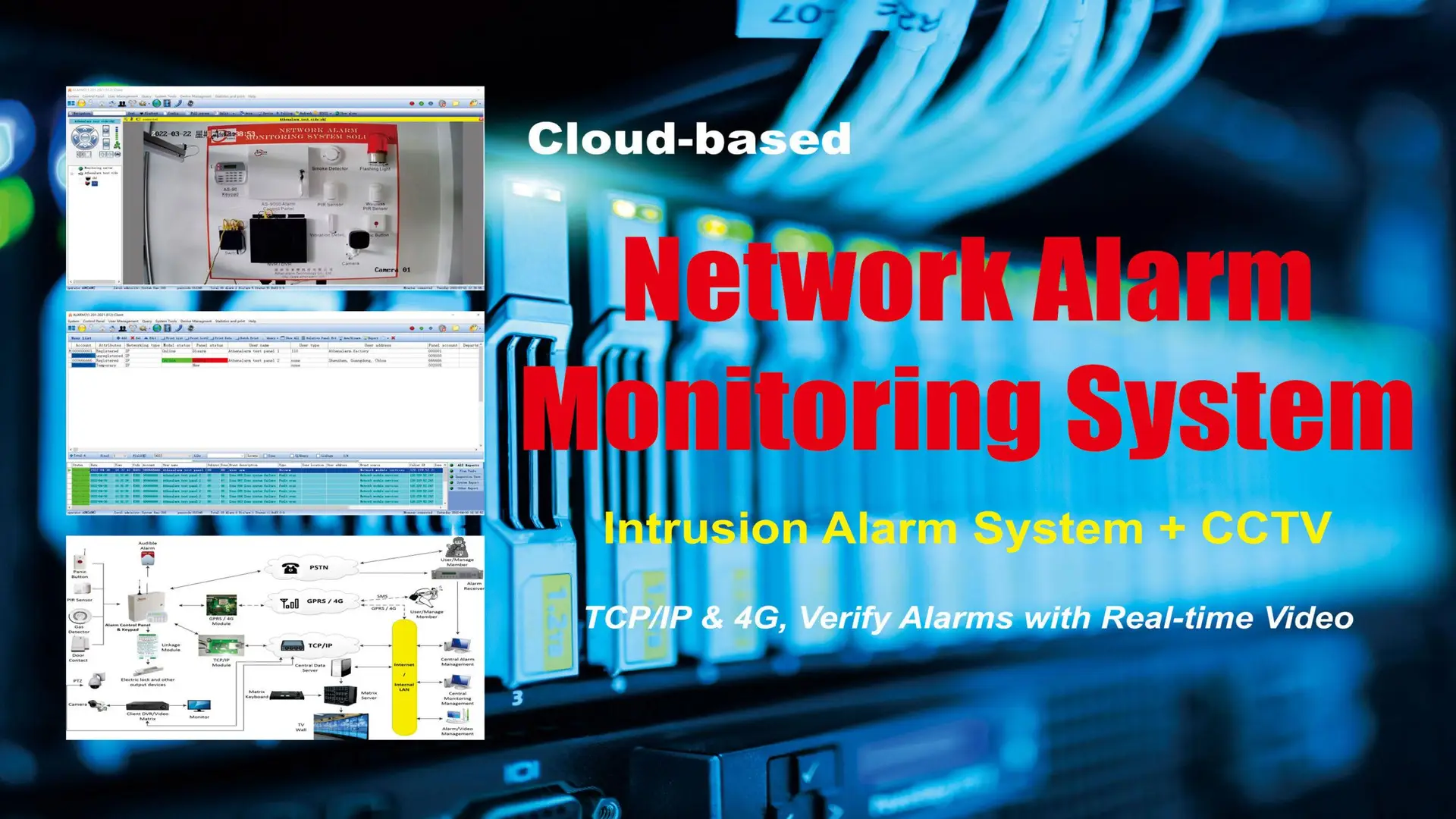
Future Trends: How Intrusion Alarm System Manufacturers Are Evolving into Security Infrastructure Providers
Cloud-Based Monitoring
The security industry continues to move away from localized, on-premise hardware receivers toward decentralized cloud-based monitoring architectures. Forward-looking intrusion alarm manufacturers are developing cloud-hosted routing nodes that handle the high-volume polling from thousands of field panels. These cloud nodes securely parse, filter, and stream verified events to traditional physical central stations via secure web sockets, reducing infrastructure footprints and lowering setup costs for new monitoring facilities.
Remote Diagnostics
As field operational costs continue to rise, advanced predictive diagnostics are becoming standard practice. Future panel architectures will do more than simply report a broken wire loop; they will actively monitor subtler electrical shifts over time. By analyzing minor loop resistance variations or tracking bus voltage fluctuations, the panel’s software can flag deteriorating field wiring or corroded contacts. This allows integrators to schedule preventative maintenance before a complete component failure triggers a system outage.
Future System Intelligence Lifecycle
The processing pipeline for advanced alarm events evolves across three distinct technological steps:
-
Edge Infrastructure Generation: Real-time localized computing runs continuous multi-sensor analysis and filters out environmental circuit variations directly on the control board.
-
Cloud Integration & Redundancy Layer: Scalable cloud-managed servers process incoming traffic, balance communication line loads, and verify connection paths across database clusters.
-
Central Station Monitoring Deployment: Operators receive clean, high-priority emergency events integrated with automated dispatch templates and real-time video validation fields.
Distributed Security Architectures
Modern enterprise projects require distributed security deployment models. Rather than relying on a single large control panel to manage an entire multi-building facility, systems are utilizing networks of smaller, interconnected edge controllers. These decentralized nodes operate with local autonomy, sharing event data and system statuses over an encrypted corporate WAN network. This approach eliminates single points of failure and simplifies the expansion of large-scale facilities.
AI-Assisted Alarm Event Analysis
Artificial Intelligence is transforming how monitoring centers handle high signal volumes. Modern control panels and upstream management software are beginning to incorporate localized machine learning models to analyze historical system behavior. By evaluating multi-sensor trip sequences, historical user arming habits, and localized weather conditions, these intelligent filtering systems can accurately identify and flag highly probable false alarms (such as a faulty sensor fluttering during a storm). The system can automatically deprioritize these non-critical signals while highlighting confirmed, anomalous breach patterns for immediate operator review.
Technical FAQ
What distinguishes an enterprise intrusion alarm system manufacturer from a standard alarm device manufacturing factory?
A standard factory focuses primarily on high-volume assembly of basic hardware devices, such as plastic sensor housings and localized alarm boards. They often rely on legacy analog communication methods and offer minimal software support. In contrast, an enterprise manufacturer provides a holistic, network-centric ecosystem. They engineer advanced edge computing hardware (such as the Athenalarm AS-9000 alarm control panel), build integrated management software suites, implement open IP protocols (SIA DC-09), and ensure seamless integration with central monitoring station automation platforms.
Why is alarm monitoring software as important as the alarm panel hardware itself?
Hardware panels are responsible for collecting physical sensor inputs at the edge, but the monitoring software layer manages the broader system data flow. It handles panel authentication, parses incoming encrypted communication packets, runs automated scheduling logic, and formats event data for the monitoring center’s automation platform. Without a stable, scalable software engine, the hardware panels cannot transmit data reliably.
What communication architecture provides the highest reliability for commercial intrusion alarm systems?
The industry standard for high-reliability commercial security is an uncompressed, encrypted dual-path IP communication architecture that combines a high-speed LAN connection with a 4G LTE cellular fallback. The panel should be configured to use parallel transmission paths or execute instant, sub-second failovers. It must also feature active line supervision heartbeats to ensure the CMS is notified immediately if a communication path is lost or compromised.
How does central station monitoring design affect real-world alarm response times?
If a panel’s firmware or protocol design delivers poorly formatted data packets to the central station, operators are forced to spend critical time manually identifying the location and type of alert. Conversely, an open-protocol, network-oriented architecture delivers clearly formatted, descriptive event packages alongside real-time video verification links. This provides operators with immediate situational awareness, enabling them to verify the emergency and dispatch response services within seconds.
Why do multi-site deployments require different alarm system architectures than single-site installations?
Single-site systems are typically configured and maintained individually on-site. In contrast, multi-site enterprise deployments (such as retail chains or bank branch networks) require a centralized management architecture. The master-node management design lets a master configuration station handle remote template deployment, manage group partition updates, and aggregate system health logs from remote site nodes (e.g., Node Site A, Node Site B) automatically over WAN networks. This allows a central security team to manage the entire ecosystem efficiently without constantly sending technicians into the field.
What should an alarm distributor look for before selecting an OEM burglar alarm manufacturer?
Distributors should look for a manufacturing partner that offers:
- An open, non-proprietary communication protocol implementation (such as native SIA DC-09 over IP).
- A scalable product line managed through a single software suite.
- Proven capabilities for custom firmware localization and regional cellular band adaptation.
- Documented international quality and safety certifications, including ISO9001 and IEC 62368-1.
How do TCP/IP alarm panels improve overall system scalability?
Legacy analog systems are physically constrained by the number of telephone lines connected to the receiver hardware. In contrast, TCP/IP-enabled panels communicate over standard network data streams. A modern network receiver or monitoring software server can handle thousands of concurrent, securely encrypted panel connections via virtualized network sockets. This enables seamless, software-defined system scaling without requiring expensive physical infrastructure upgrades.
What role does CCTV integration play in professional alarm verification?
CCTV integration allows the system to pair a physical zone alert with corresponding real-time video footage from the scene. When a sensor is tripped, the integrated software captures a clip showing the activity immediately before and after the trigger. This clip is delivered directly to the monitoring operator’s workstation, allowing them to instantly differentiate between environmental false alarms and genuine security breaches.
What exactly is multi-path alarm communication, and how is it configured?
Multi-path communication involves equipping a control panel with multiple independent transmission paths—typically a primary high-speed network link (TCP/IP via LAN) and a secondary wireless path (4G LTE cellular). The system configuration defines the primary path for standard operations and establishes a fast check-in interval (heartbeat). The firmware is configured to automatically route all pending event data through the backup cellular path if the primary link fails to clear a health check.
Can an enterprise monitoring center manage thousands of alarm panels simultaneously?
Yes, provided the center implements a scalable network-centric architecture. By utilizing high-capacity servers, robust relational databases (such as SQL), and streamlined software platforms like Athenalarm’s Alarm Center Management suite, a monitoring facility can manage thousands of distributed panels. The software keeps processing loads low by using efficient packet structures, handling routine signals automatically, and filtering noise so operators can focus on high-priority alerts.
How does an RS-485 keypad bus handle long wire runs in large commercial projects?
An RS-485 bus uses differential signaling over a shielded twisted pair of wires to ensure reliable data transmission. This architecture measures the voltage difference between two signaling lines (V_A - V_B), making it highly resistant to electromagnetic interference and common-mode noise because any induced interference affects both lines equally. To prevent signal degradation across long cable runs (up to 1200 meters), installers must use high-quality cables, maintain proper shielding, and install 120-ohm termination resistors at the ends of the bus line to eliminate data packet reflections.
What are End-of-Line (EOL) resistors, and why do commercial systems require them?
End-of-Line resistors are calibrated electrical resistors installed at the furthest point of a hardwired zone loop. They create a specific, baseline electrical resistance that the control panel monitors continuously. By measuring the current flow, the panel can differentiate between a normal secure circuit, an open alarm condition, a short-circuit fault, or an intentional wire tamper cut. This configuration provides higher physical security than simple open/closed dry contact loops.
What is the SIA DC-09 protocol, and why is it preferred over proprietary formats?
SIA DC-09 is an open, international standard developed by the Security Industry Association for transmitting alarm data over internet protocol (IP) networks. It defines a standardized way to package event data, account details, zone codes, and security encryption wrappers into clean TCP/IP packets. By using an open standard like SIA DC-09, manufacturers ensure their panels can communicate with any compliant third-party central station receiver. This protects system integrators from being locked into proprietary single-brand ecosystems.
How do enterprise intrusion alarm systems minimize false alarms caused by environmental factors?
Enterprise platforms use multiple software and hardware filtering methods to prevent false alarms:
- Intelligent Pulse Counting: Requires multiple sensor detections within a set window before triggering an alarm.
- Cross-Zone Verification: Requires two independent, adjacent zones to trip before a confirmed intrusion signal is generated.
- Adjustable Alarm Verification Delays: Temporarily delays transmission to allow for localized panel processing.
- Advanced Internal Logic: Analyzes sensor inputs against historical system behavior to flag and ignore unusual or erratic sensor trips.
What steps are involved in performing remote firmware updates on commercial panels safely?
To execute a remote firmware update safely across a multi-site network, the system follows a structured deployment process:
- The management platform establishes a secure, encrypted connection to the target panel.
- The firmware file is transmitted to the panel’s temporary storage, verifying file integrity using a cryptographic checksum calculation.
- The panel verifies that its local systems are in a disarmed, stable state with full backup battery capacity.
- The system executes the firmware installation, utilizing an integrated bootloader routine. This bootloader can automatically roll the panel back to its previous working configuration if a power disruption or installation failure occurs during the update process.